
Last Tuesday, Robert Thurman died.
His life was devoted to bridging worlds, and to making the case that the inner transformation that Buddhism calls for is intrinsically linked to the outer transformation our world so deeply needs. He was at the forefront of explaining the revolutionary, world shattering, world creating power of Buddhism.
Brilliant, prolific, charismatic, relentless, entrepreneurial, absolutely devoted to Tibetan Buddhism and doing good, and generally causing a ruckus in the best way; Robert Thurman is the academic, trickster, rockstar, grandfather of the American Buddhist world. For a Buddhist diehard / geek / bum like myself, Robert Thurman ignited a sense of giddy hero worship.
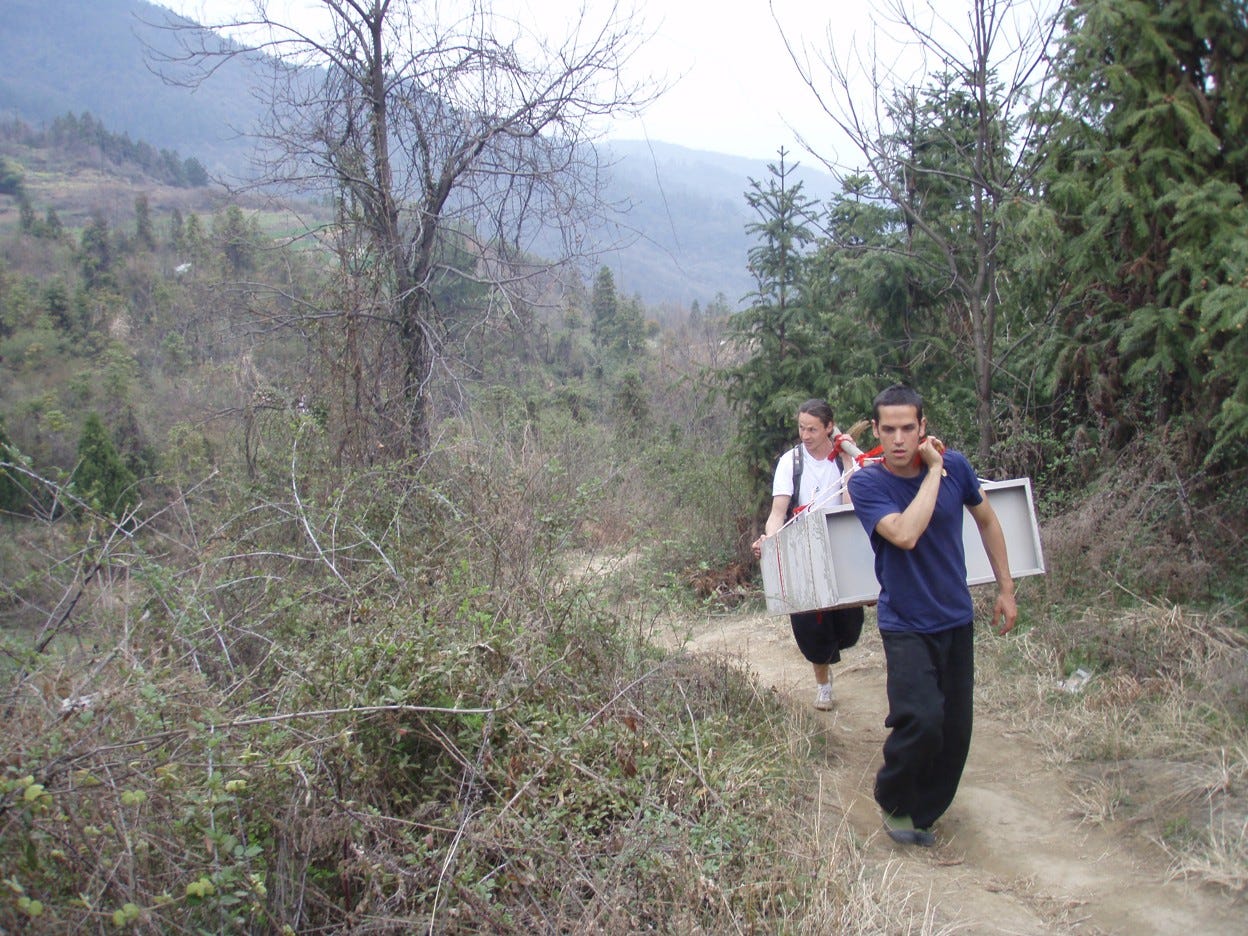
I don’t remember when I first heard of him, but I do remember when I first held one of his books. It was 2013, I was wrapping up almost a year of study in Myanmar and China and coming off of five bitter months training qigong and tai chi in central China. Transiting home, after days of eastward train travel, I found myself awaiting a flight with two free days in Hong Kong.
Stepping off the Star Ferry (a Hong Kong ferry that shuttles commuters and tourists across Victoria Harbor) I wandered into a small bookstore. It was the first true bookstore I’d been in in almost a year. At least the first one with any English books. And also with any Buddhist Books. Blasted by both cool air conditioner air and a jolt of intellectual freedom simultaneously, the sense of relief was immense.
China is a fascinating country. To say the least. They’ve done much over the last few decades worthy of emulation and envy. It’s also ruled by a totalitarian regime, and the constant sense of suffocation that it brings is hard to describe and impossible to miss.
As one of the world’s most vocal voices against the CCP and the Chinese invasion and destruction of Tibet, and arguably the world’s greatest champion of the Dalai Lama, it says a lot about Hong Kong’s special status under the so called “one country two systems” framework that I should find Robert Thurman’s books in that store. The ever tightening noose around this special status in the years since is an undeniable tragedy, as of course is the continued destruction and subjugation of Tibet.
Over the next few days I devoured Robert Thurman’s book Inner Revolution: Life, Liberty, and the Pursuit of Real Happiness. It weaves together personal history with vast sweeps of world history, traversing political, religious, and cultural domains. It argues that what the Buddha taught and created and what his millennia-long dispensation has continued and furthered is not a meek withdrawal from the world, but rather a path of inner transformation that is intrinsically and powerfully linked to our greatest hope for positive external transformation.
It is a message that all who care about the fate of the world ought to seriously consider.
Robert Thurman summed up the thesis of Inner Revolution years earlier in an academic paper, describing the Buddhist stance as “one of total activism, an unswerving commitment to complete self-transformation and complete world-transformation” (Thurman, 1983, p. 19).
Those are powerful words. I’ve returned to them over and over again. They form the bedrock of my world view and my life. In short, enlightenment is a social and political project, not simply a personal one. Robert Thurman was able to give voice to a bubbling intuition I’d long felt.
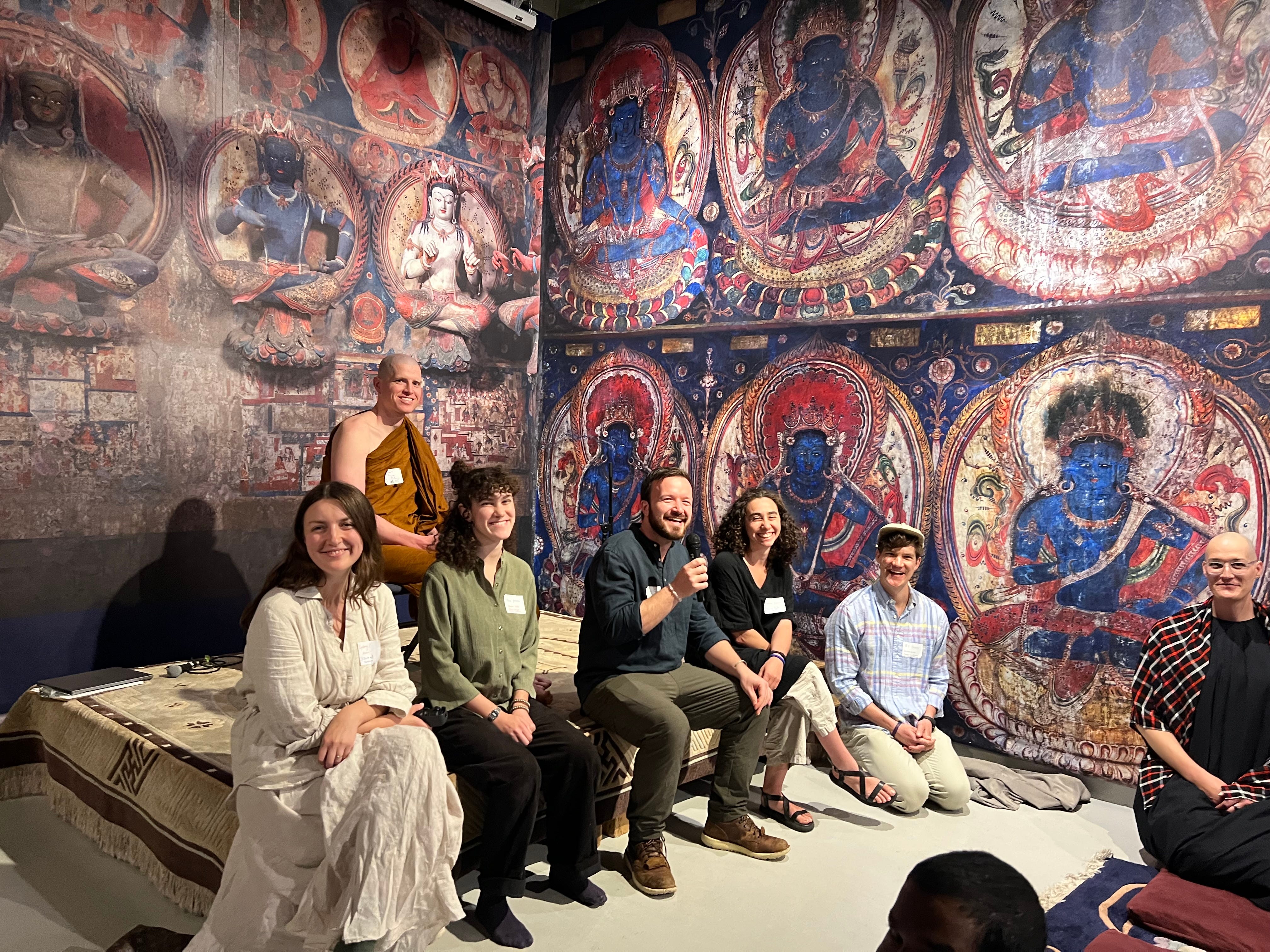
Years later, this belief in the deep value of Buddhist practice as a tool of cultural and political transformation would manifest through Dharma Gates, a 501(c)(3) nonprofit devoted to sharing contemplative practice with young adults (18–35) through donation-based retreats and programs. Dharma Gates was founded by myself and handful of others wanting to bring rigorous Buddhist practice forward to help counter the forces of nihilism and despair so prominent among young people, and train a generation of powerful, kind, clear leaders. Deep in its DNA is the idea of total activism. Dharma Gates is one organization among many that were empowered, boosted, clarified, and inspired by the pioneering work of Robert Thurman.
Upon returning to New York City, I began devouring Robert Thurman’s other work and eventually attending a weekly evening series he was leading at Tibet House. I would sit in those lectures with a mix of fascination and bewilderment. His mind was so agile, so educated, so steeped in Buddhism, so broad and so deep at the same time that it was dizzying yet captivating to follow. Careening from Manjushri, Nagarjuna, and multi-headed wrathful deities, to Walt Whitman and Alan Ginsberg, to incisive critique of Donald Trump, to stories of the Dalai Lama circa 1965 and on. It was always a roller coaster. A kaleidoscope of Western and Eastern, ancient and modern. Even when I’d read the text we were exploring I still expected to actually understand only a small percent of what he was saying.
I would sit there stunned, confused, enlivened, inspired. Loving it.
In February of 2018 I sent a cold email asking Bob Thurman if he’d be the advisor for my capstone in the Master of Applied Positive Psychology program at UPENN.
He wrote back not even half an hour later.
Sure, Miles. Great studies you;ve done with Alan, and now back doing
psych. Excellent! I’ll try to help, as long as I do;thave to travel down
there, but we can meet on skype or zoom.
BEst
TBobT
My capstone on Monasteries of the Future was the most ambitious writing project I’d ever undertaken at the time, and his support was a critical source of inspiration and encouragement throughout.
His public writing, his help on my capstone, and the inspirational vision he offered to Dharma Gates were three of the ways he impacted me most directly. But there are many, many other diffuse ways he has sent ripples through my life and of course through the world. I’ll highlight two.
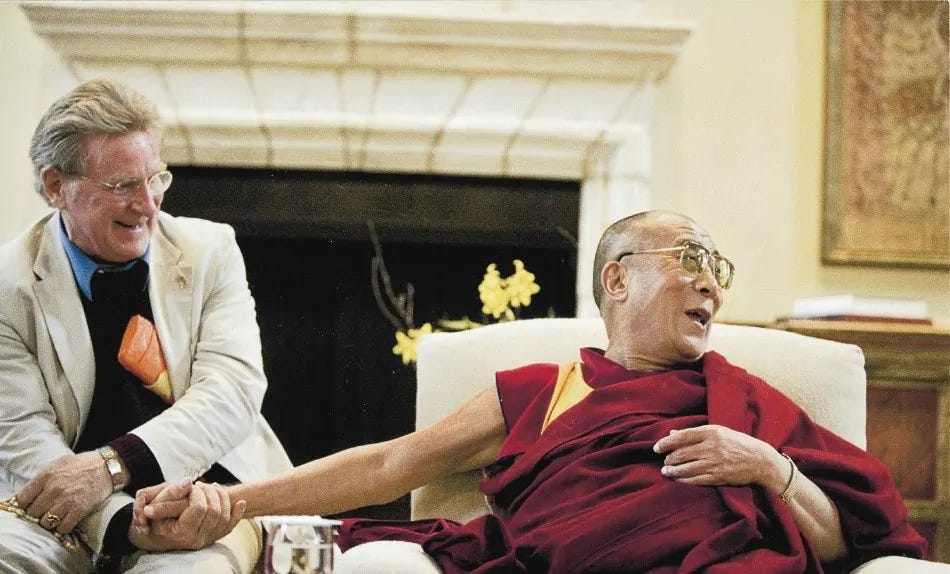
One is through his friendship with the Dalai Lama. Bob arrived in Dharamshala in 1964, already speaking Tibetan and intent on ordaining as a monk. He described weekly conversations with the Dalai Lama where His Holiness “asked me questions about Freud, Plato, Jefferson, the United States Constitution, democracy, automobiles, airplanes, and nuclear physics,” and recalls wondering “about liberty and freedom in the context of American society. Liberty to do what? To pursue happiness? Were we really happy? Were we really free?” (Thurman, 1999, p. 8).
It’s easy to forget now that only a few decades ago, Tibetan Buddhism was barely known outside of Tibet and the Tibetan diaspora in India and the collaborative dialogue between Buddhism and science was virtually non-existent. I imagine many seeds being sown as these two brilliant, devoted men formed friendship and understanding through wide-ranging conversation. Opening worlds to each other which would in time open worlds to countless others.
Another way Robert Thurman touched me is through the creation of Tibet House. Tibet House is a library and event space in lower Manhattan devoted to the preservation of Tibetan culture. It is a large beautiful space, filled with art, hosting an endless stream of events representing not just Tibetan religion and culture, but Buddhism and contemplative practice more widely. Broad and ecumenical. Generous. Whether it was Bob’s talks, the eight-week Cultivating Compassion Course, or the Nalanda Institute lectures I attended there, or the Day-long Dharma Gates fundraiser and educational event Tibet House hosted just three weeks ago, the space was a watering hole and nexus of connection to people and ideas that have changed my life incalculably.
A space like Tibet House doesn’t just exist. It exists because someone like Robert Thurman had the gumption and the drive and the vision and the will to put the idea forward and raise the funds necessary to create it.
There’s no use emulating the sheer firepower of Robert Thurman’s mind. Most of us can never run as fast as Usain Bolt no matter how hard we train. But, his spirit of adventure and of friendship, his love of learning, his commitment to relentless creative output. Proactively sowing good seed after good seed without knowing what will become of them. Living a generative, generous life to the end and doing it all with a sense of style. That can be emulated.
He didn’t have to respond to my form submission on his website years ago. He didn’t have to keep posting on his Substack till not even a week before he died. And yet he did. Just as he did so much else. As far as I can tell he lived with the Bodhisattva spirit of endless service.
The work of Dharma Gates, my writing here on Substack, everything I do as a therapist, and just my life generally is imbued, influenced, and impacted by the spirit of what Bob articulated and shared over a lifetime. Thank you for that transmission. Thank you for the way you’ve touched my life and the lives of countless others. May the goodness you embodied flow forward in an endless cycle.
Guided Meditation on the Flow of Goodness:
The guided meditation that accompanies this piece starts with the great teachers who have helped us, then moves those people we know who have helped, and on to the countless unknown people who have helped us in ways large and small. We take this flow of goodness and support and then let it feed our own intention to act in the world with benevolence and goodness. It starts with the positive ripples w'e’ve been beneficiaries of and leads on to encouraging us to be positive ripples for others.
You can find a selection of Robert Thurman’s teachings, talk interviews, etc here. Please reply in the comments section with any of your favorites or any of your own reflections on his life and what he brought to you / the world.
TEACHINGS
References:
Thurman, R. A. (1983). Guidelines for Buddhist social activism based on Nāgārjuna’s” Jewel Garland of Royal Counsels”. The Eastern Buddhist, 16(1), 19-51.
Thurman, R. A. (1999). Inner revolution: Life, liberty, and the pursuit of real happiness. NewYork, NY: Riverhead Books.
Miles, this is such a beautifully written tribute. I’m so sorry to hear of the passing of someone who impacted your life so much. I have never heard of Bob but the way you describe him, especially his ability to intertwine ancient and modern teachings, makes me want to explore his work. I am grateful to him for all the ways he influenced you and helped you become the teacher & person you are today. May his spirit & service live on through the lives he touched ❤️